
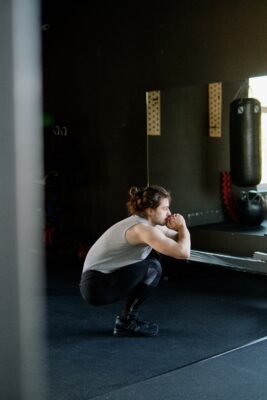
I contributed to Patient.info for a feature examining the deep resting squat, why many adults find the position difficult and whether regularly practising it can help maintain mobility as we get older.
The article was medically reviewed by GP Dr Colin Tidy and looks at the deep squat as a natural resting posture rather than simply another gym exercise.
Why has the deep squat become difficult for so many of us?
A comfortable deep resting squat requires movement through the ankles, knees and hips, alongside enough balance and control to maintain the position.
In many parts of the world, squatting deeply remains a perfectly normal way to rest, work or eat.
For many people in Western countries, however, our daily lives involve considerably more time sitting in chairs, driving and working at desks. As a result, we don’t regularly move through these deeper ranges of motion.
That doesn’t mean everyone needs to be able to sit comfortably in a deep squat.
Individual anatomy matters. Hip structure, femur and torso length, ankle mobility and previous injury can all influence what someone’s squat naturally looks like.
There isn’t one perfect squat position that everybody needs to achieve.
A useful tool for mobility
I’ve used deep squat positions with many clients over the years to work on hip and ankle mobility, improve confidence in deeper ranges of movement and make everyday movement feel more comfortable.
The important distinction is that I wouldn’t present the deep squat as a cure for pain or injury.
There isn’t strong evidence to support claims like that.
What we do know is that mobility training can improve joint range of motion, and the deep squat is one practical way of moving the hips, knees and ankles through a large range.
That makes it particularly relevant for people who spend large parts of the day sitting, feel restricted through the hips or ankles, want to improve their squat technique or simply want to maintain their ability to move comfortably as they get older.
Start with the position you have
One of the main messages I wanted to get across in the Patient.info feature was not to force the movement.
Mobility work shouldn’t be painful.
There is a difference between the mild discomfort that can come from moving into an unfamiliar position and sharp or significant pain.
Someone who struggles with a full resting squat can make the position easier by holding onto something stable, placing a small support beneath the heels or simply squatting as deeply as feels comfortable and progressing gradually from there.
For someone who can safely practise the position, even 30 to 60 seconds can be enough to begin with.
Consistency is more important than trying to sit in the position for long periods occasionally.
Mobility becomes increasingly valuable as we age
For me, this is where the deep resting squat becomes particularly interesting.
As we get older, maintaining strength matters enormously, but so does maintaining the confidence and mobility required to move through everyday life.
Being able to lower yourself towards the floor and get back up again is a genuinely useful physical capability.
The goal therefore isn’t to achieve an impressive-looking squat for its own sake.
It’s to maintain as many movement options as possible for as long as possible.
A deep resting squat can be one small tool within a much broader approach that includes strength training, walking, balance work and regular movement.
You can read my full contribution in the Patient.info feature HERE.
Joseph Webb
Expert coaching. Entirely personal.
Chartered Personal Trainer | FRSPH | FCIMSPA
